
Bedside table September
These are among the books that have landed on my desk in the past couple of weeks. Some will be reviewed in full later.
A Pretoria Boy, by Peter Hain (Jonathan Ball Publishers)
 South Africa-reared Peter Hain, in his efforts to fight apartheid by campaigning against South African international rugby and cricket tours, became known here as “public enemy number one” and in the UK as “Hain the pain”. But he and those who campaigned with him – and some of their campaigns were pretty dramatic – inflicted major damage on white South Africa’s soft sports-loving underbelly. Legendary rugby boss Danie Craven said during Hain’s Stop the Seventy Tour in the 1970s: “There will be a black Springbok over my dead body.” Well, we know how that turned out. This is Hain’s autobiography, starting with his boyhood in a family of both liberal and Liberal Party principles in Pretoria, where he attended Pretoria Boys’ High, to his departure with his family to the UK, his rising political profile within the Labour Party and the anti-sports tours campaign, to his becoming a Labour MP and eventually British peer, still fighting for justice. South Africa remains close to his heart, but he certainly doesn’t subscribe to the adage of “my country right or wrong”. He celebrated in 1994, but doesn’t pull his punches when assessing where we are today. Now 71, he is still fighting campaigns, and has given testimony to the Zondo Commission. He says (his italics): “I have learnt that if you try to do too much, you’ll end up doing too little, that if you try to do everything, you’ll end up doing nothing. Better to focus on concrete objectives and not to get carried away with grand designs, ideological rhetoric or the supercilious purism of the armchair critic. Instead, as Alan Paton once counselled me, try to be an all-or-something person, not an all-or-nothing person.”
A Home on Vorster Street – a memoir, by Razina Theba (Jonathan Ball Publishers)
 Although Razina Theba lived with her parents and sister, every day she would find her way to the tiny flat occupied by her grandparents in Vorster Street, Fordsburg. The older couple had brought up seven children in it, and though by the time Razina came along, most had married and left, it was still the family HQ to which uncles and aunties and many cousins gravitated. All the residents in the block were of Indian descent, and lived together in loose neighbourliness, swopping cakes and snacks at Eid and Diwala. Theba has written a charming, often sad, occasionally frightening story of an Muslim family in the dying days of apartheid.
- This is one of Exclusive Books’s top books for September.
A Brief History of South Africa – from the earliest times to the Mandela presidency, by John Pampallis and Maryke Bailey (Fanele/ Jacana)
 The authors of this book, teachers and educationalists, have managed an astonishing feat – a compilation of South African history in just under 300 pages (although with pretty small print). As the subtitle indicates, the volume begins with the ancestors of the modern San over 10 000 years ago, but concedes little is known of those societies. It is written in two parts: a chronological history and then a section on themes in South African history, such as the economy, the Bantustans, life under apartheid and the trade union movement. At the end of each chapter are a set of discussion questions as well as book titles for additional reading, and a list of online visual resources. The authors say they have not produced a comprehensive history, but are rather trying to present a progressive introduction to local history and to encourage critical thinking about it, because most South Africans, those who were schooled both before and after 1994, have scant knowledge of the country’s past. In his foreword, former president Kgalema Motlanthe says: “History is not just an account of past events. It is also an interpretation of those events and developments… It is for this reason history is deeply political.”
- This is one of Exclusive Books’s top books for September.
The Island of Missing Trees, by Elif Shafak (Viking/ Penguin Books)
 Ada Kazantzakis is 16, in her second-last year of school in north London. She lives with her father, Kostas; her mother is dead. She knows very little about her family history, only that her parents, one Greek and one Turkish, came from the now divided island of Cyprus. Her parents did not talk about their families or their youth, and when her mother died no one from Cyprus bothered to come to her funeral. But back in 1974, teenagers Kostas, who is Greek and Defne, who is Turkish, meet in secret in a tavern, a place where they are able to forget the sorrows and tensions of their island. In the tavern a fig tree grows through a hole in the roof, and the tree knows the teenagers’ secrets. It’s also there when Nicosia is destroyed and the teenagers have to part. Years later, the only link Ada has to her home is a cosseted fig tree growing in the back garden. Elif Shafak, a prize-winning British Turkish writer whose work has been shortlisted for the Booker Prize, has dedicated this novel to: “Immigrants and exiles everywhere, the uprooted, the re-rooted, the rootless, and to the trees we left behind…”
- This is one of Exclusive Books’s top books for September.
Such a Quiet Place, by Megan Miranda (Corvus)
 Hollow’s Edge is a quiet community on the edge of a lake. Everyone knows everyone else, and they’re supportive of each other. But then one night Brandon and Fiona Truett are found dead, and their neighbour, Ruby Fletcher, is convicted of their murder. But after a mistrial she is freed, and she comes back to Hollow’s Edge, to the consternation of the community in general and of her old housemate, Harper Nash in particular. People start to turn on each other and it soon becomes clear that not everyone was honest about the events on the night the Truetts died. Harper realises it is time she tried to uncover the truth. The Observer has described this book as “An unnerving and extremely classy thriller.”
- This is one of Exclusive Books’s top books for September.
 Remember the great comeback from Winston Churchill when British Labour MP Bessie Braddock him: “You’re drunk!” To which he replied: “And you’re ugly, but in the morning I’ll be sober.” Apparently Boris Johnson, Britain’s current prime minister and a great Churchill fan, has identified the very spot in Westminster where the exchange took place. But journalist Otto English says it probably never happened. It was first related by English writer Augustus Hare in his diary about an encounter between two unnamed British MPs in 1882, when Churchill was eight years old and Braddock not yet born. This is just one of English’s fake-history put-downs in this fascinating book that exposes myths of World War II, the adventures of Christopher Columbus (who never set foot on the continents of north or south America), the belief that Britain’s royal family is German, that Abraham Lincoln believed all men were created equal and that ancient people thought the Earth was flat (they knew it wasn’t).
 Veteran novelist Douglas Kennedy, who has been described as the “maestro of family noir”, has written about one of big divisive issues of our time: abortion. An Uber driver has to drop off a retired professor at the abortion clinic where she volunteers, and is caught up in a violent vortex of protest. Afraid of the Light is described as “a novel of high suspense and considerable moral complexity”.
 Lottie is an archivist at Britain’s National Archives at Kew when she meets Tom at a wedding. He lives in Rome, and within nine months persuades her to marry him. A whole new life beckons for Lottie when she secures a job as an archivist in the eternal city. She discovers a valuable 15th century painting, and decides to explore the life of Nina Lawrence, the woman who left it behind. Nina had gone to Rome after World War II to restore gardens that had been devastated by war. But when she died in 1978 no one attended her funeral and Lottie is puzzled by this. She uncovers a complicated love story set in the turmoil of post-war Italy, and what she finds will come to affect her own future. Elizabeth Buchan is a best-selling prize-winning British novelist and Two Women in Rome looks like a wonderful read.
 Twenty-six-year-old Nella works as an editorial assistant at a New York publishing company. But the job isn’t great in that she’s the only black employee, and she becomes tired of loneliness and what she sees as her colleagues’ micro-aggression. And then Hazel, another black woman, joins the staff, and Nella is delighted. They hit it off, but a series of events follow which leave Nella under a cloud of opprobrium while Hazel is seen as the office darling. Shortly after this, nasty notes appear on Nella’s desk saying she should resign. Is Hazel writing them? What is going on? Soon Nella realises there is more than her career at stake. This novel has been described as “dark, funny and furiously entertaining”.
 Comrade Editor – on life, journalism and the birth of Namibia, by Gwen Lister (Tafelberg)
 The Grief Handbook – A guide through the worst days of your life, by Bridget McNulty (Self-published)
 Ougat – From a hoe into a housewife and then some, by Shana Fife (Jonathan Ball Publishers)
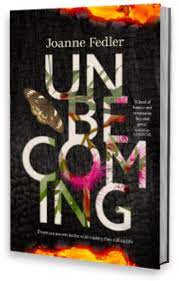 Unbecoming, by Joanne Fedler (Penguin Books)
 Still Life, by Sarah Winman (4th Estate)
 Lean Fall Stand, by Jon McGregor (4th Estate)
 Great Circle, by Maggie Shipstead (Doubleday)
 The story of the compilation of the Oxford English Dictionary is well known. Published by the Oxford University Press, it took many more years than the 10 originally planned, and began in a garden shed grandly known as the Scriptorium. The walls were lined with shelves which housed millions of slips of paper sent in from around the world giving the use and meaning of individual words. In The Dictionary of Lost Words Pip Williams invents a young orphan called Esme who spends her days under the sorting table in the Scriptorium. One day a slip of paper flutters to the floor containing the world “bondmaid”. Eventually Esme realises some words, especially those relating to women and their experiences, somehow never make it into the dictionary. So she starts collecting them for another dictionary: The Dictionary of Lost Words.
 We’ve all heard of the dropping of the atomic bombs on Hiroshima and Nagasaki that brought World War II to an end. But I didn’t know anything about the incendiary bombing of scores of Japanese cities, including Tokyo, which must have killed hundreds of thousands of people, in the months between March and August 1945. The bombing, by the Americans, was the brainchild of General Curtis LeMay and was springboarded from the Marianas islands which, after they had been wrested from the Japanese in 1944, finally put Tokyo within flying distance of B-29 bombers. And yet all this is not really what The Bomber Mafia is about. It is about a dream that went wrong, and what happens when technology and good intentions collide.
 The Swarts are an ordinary white family, clinging to what they call their farm on the outskirts of Pretoria. The story of their decline is told in four snapshots, each one involving a family funeral, and each one happening in a different decade of South Africa’s recent past. The protagonists get older and life grimmer, and at the novel’s heart is a promise made years ago, and not kept. One reviewer says the prose is “leavened with languid comedy, as thought Galgut had collaborated with Tennessee Williams. The effect is utterly compelling.”
 This is what Wikipedia has to say about Oxycontin: “Oxycodone, sold under the brand names Roxicodone and OxyContin among others, is an opioid medication used for treatment of moderate to severe pain. It is highly addictive and is commonly used recreationally by people who have an opioid use disorder.” The Sackler family are the owners of Purdue Pharma, the developers of Oxycontin, and this book is about three generation of the family and their legacy. It is said that the company helped spark an opioid epidemic that has killed nearly half a million Americans in the past 20 years.
 Telling stories staves off hunger, which is just as well as Father doesn’t have a job and Mother’s miserable maize plants aren’t going to feed many. This is a coming-of -age novel set in Gushure Village, in rural Zimbabwe in the period from the Second Chimurenga to independence, and according to the cover, features malevolent mermaids, eccentric shamans, outrageous relatives, fearsome teachers and men who transform hippos.
 Go Away Birds is a lovely read about Skye, a young woman who’s more or less lost the plot. She is suffering from grief for a loss she has never been able to talk about, not even to her husband Cam. She and he own a restaurant in Cape Town, but then an unwise remark in a magazine interview upends the business. Meanwhile during a Christmas with Cam’s family at Misty Cliffs, things unravel. Skye flees back to her family home in Mpumalanga, where her decidedly strange mother is running writing retreats and is possibly going bankrupt. Her brother is deeply suspicious of what is going on and is in some trouble too. Skye is convinced her marriage is over, and there is a rather nice chap on the farm next door, but things go awry there too. Maybe it’s time for her to stop running. Set in modern South Africa, the novel is nuanced and warm.
 Most of us worry about money. And we especially worry about whether we will have enough money to retire on. In her introduction Kim Potgieter, a financial planner, says starting to think about your money at 60 is too late (so that’s me, then) and she adds: “The earlier you start, the more options you have.” She says her book is a call to action, a reminder that one’s second chapter is a chance to create one’s best life. Midlife, she says, is the perfect time to pause, tune in and decide what you’re going to do next.
 Imagine if Cecil John Rhodes returned to Africa in the present day to be interrogated by some of those on whose lives he and his cohorts had such devastating effect. This is the theme of the short novel by Professor Adekeye Adebajo, a former Rhodes Scholar and currently the director of the Institute for Pan-African Thought and Conversation at the University of Johannesburg. It is set over five days in an African Hereafter. He is accused by Two Counsel for Damnation – Olive Schreiner and Stanlake Samkange – and defended by two Counsel for Salvation – Nelson Mandela and Harry Oppenheimer, while the seven judges include Ruth First, Boutros Boutros-Ghali, Patrice Lumumba and Maya Angelou.
 The Sanatorium, by Sarah Pearse (Bantam Press)
 A rich family’s home is burgled, and heiress Patricia Lockwood is abducted. The girl escapes, but no one is ever arrested; nor are the stolen items recovered. Twenty years later, at a New York murder scene, a Vermeer painting and a leather suitcase with the initials WH3 are found. The suitcase had belonged to Win Horne Lockwood III and the Vermeer to his family, and now he wants some answers. The FBI have no clues, but Win decides to investigate.
 How the One-Armed Sister Sweeps her House, by Cherie Jones (Tinder Press)
 Amy is a bit odd. She is cool and efficient at the office and something of a hoarder at home. In fact soon there won’t be any room for her among the pretty wine bottles and piles of newspapers, the terra cotta pots, the chipped china bird. Amy has been like this for 11 years, since her world fell apart – saving things that most other people would throw away. And then a family move in next door, and Amy’s life starts to change again. Everything is Beautiful is described as the sort of book lovers of Eleanor Oliphant is Completely Fine would enjoy.
 It’s Not Inside, It’s on Top – memorable moments in South African advertising, by Khanya Mtshali (Tafelberg)
 I suspect this is an important book; certainly other reviewers such as Don Pinnock have described it so. Adam Cruise is an investigative environmental journalist and academic, and the academia shows. In the prologue I was rather bogged down by his use of the terms weak and strong anthropocentrism, which basically describe how humans tend to regard nature as something for us to enjoy and control, rather than being vital to the survival of everything on the planet. But with the UN Climate Change Conference looming – it’s due to take place in Glasgow in November – it behoves us all to sit up and take notice. Or as Cruise says: “It is clear, therefore, that a major shift in our attitude and behaviour needs to occur, and without any further delay – otherwise we all might be sharing the fate of the dinosaurs.”
 The Smallest Man, by Frances Quinn (Simon & Schuster)
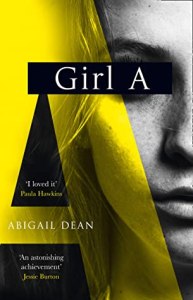 Girl A, by Abigail Dean (HarperCollins)
 The Prophets, by Robert Jones jun (riverrun)
 The Chanel Sisters, by Judithe Little ((H Review)
 Shuggie Bain, by Douglas Stuart (Picador)
 How I Learned to Understand the World, by Hans Rosling (Sceptre)
 Unconventional Wisdom – Adventures in the surprisingly true, edited by Tom Standage (The Economist Books)

 Dark Tides, by Philippa Gregory (Simon & Schuster)
 One of the first books I recall owning was a red cloth-bound copy of Winnie-the-Pooh, with a map of the Hundred Acre Wood where all the stories happened, marked: “Drawn by me and Mr Shepard helped”.
 With Christmas just a week or so away, it’s time to refine the prezzie lists and go shopping. Some people are dead easy to buy for: me for instance. I want a canoe.